
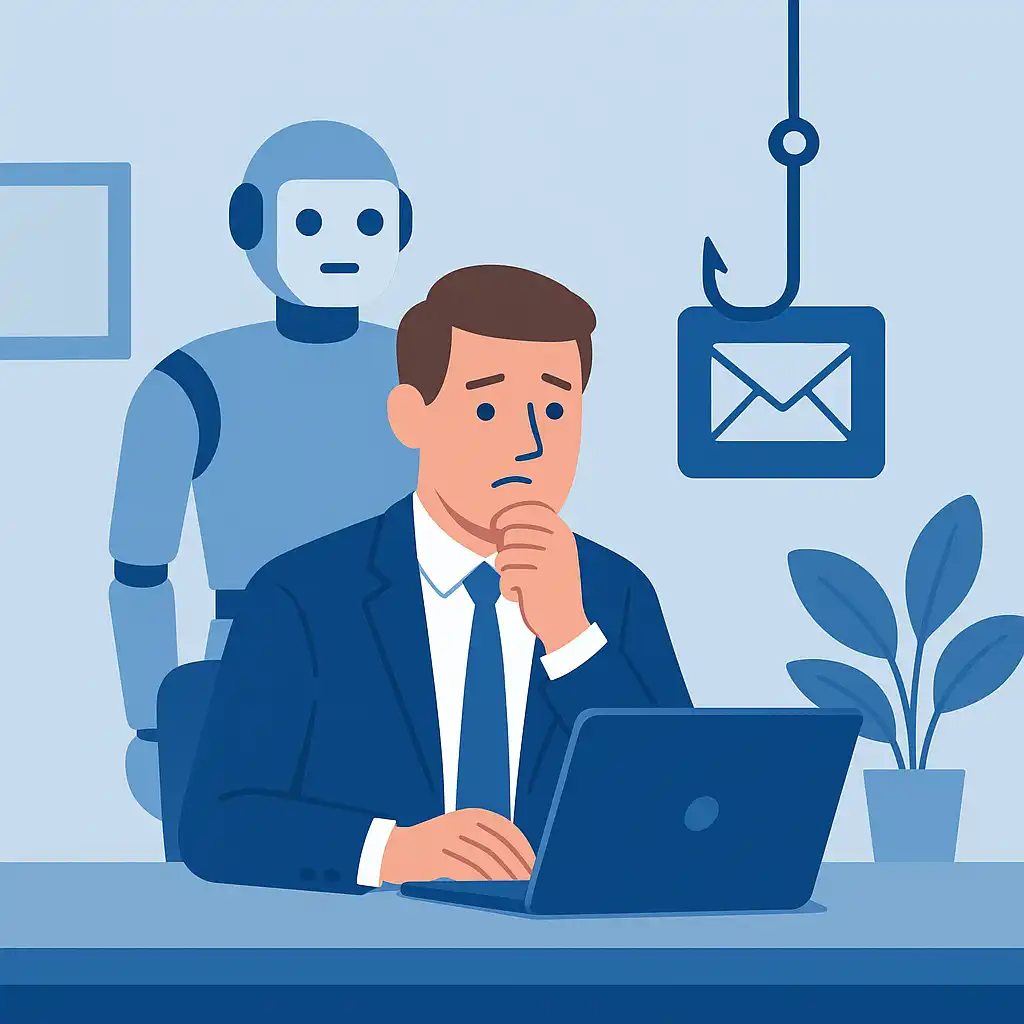
As artificial intelligence tools become more accessible, cyber-criminals are harnessing these tools to craft ever-more convincing phishing campaigns. For small and medium-sized businesses, which often lack the sophisticated defences of larger organisations, this shift represents a significant escalation in risk.
Personalisation at Scale
AI-driven platforms can trawl social media, corporate websites and public records to assemble detailed profiles of your staff, clients and partners. With natural-language models, attackers generate emails that reference recent events, use correct job titles and even mimic writing styles. The result: messages that fly under the radar of traditional spam filters and fly straight into an employee’s inbox.
Deepfake Voices and Video
Beyond text, AI now enables deepfake audio and video, allowing fraudsters to impersonate executives in real time. Imagine a CEO calling you to approve an urgent funds transfer or a voicemail from your CFO requesting payroll changes. These tactics exploit natural trust in familiar voices and faces.
Rapid Adaptation of Attack Techniques
AI tools learn and evolve. When defenders deploy new filters or training modules, attackers can quickly retrain their models to bypass them. This cat-and-mouse dynamic means that static defences, such as simple keyword blockers, are increasingly ineffective.
Balancing Productivity and Protection
While AI can bolster your own productivity, such as through automating routine monitoring, analysing logs and flagging anomalies, you must balance convenience with control. Granting broad API access or installing unvetted AI plugins can unwittingly expose credentials or sensitive data.
Key Takeaways
AI will shape both attack and defence in the months and years ahead. For SMEs, the path to resilience lies in a layered approach: staff awareness, robust verification processes, adaptive defences and careful governance of AI tools. By treating AI-enabled threats as an evolving challenge rather than a one-off problem, growing businesses can stay one step ahead of the next wave of sophisticated phishing campaigns.